
The National Environment Agency (“NEA“) is proposing to: (i) revamp the Mandatory Energy Labelling Scheme (“MELS“); and (ii) introduce Minimum Energy Performance Standards (“MEPS“) and MELS for household washing machines, household fans and household dishwashers. NEA launched a public consultation exercise on these proposals from 21 October 2026 to 9 November 2026.
By way of background, specified appliances and equipment are already regulated under MEPS and MELS under the Energy Conservation Act. Since introducing these schemes, NEA has gradually broadened their scope to cover major energy-consuming household appliances and selected commercial equipment. The existing MELS uses a multi-tick Energy Label, with more ticks indicating higher energy efficiency.
These measures have shifted Singapore’s market towards more energy-efficient regulated products, as progressively tighter MEPS requirements have phased out less efficient products. Many regulated products now carry higher Energy Label tick ratings.
Revamped Energy Labels
Two Label Classifications
Given the narrowing energy efficiency range for a number of products, NEA proposes to simplify the Energy Label into a two-tier system. This new system aims to help consumers continue to make informed purchasing decisions while encouraging suppliers to introduce more energy-efficient products into the market.
All regulated goods would be required to carry either an “Energy Label with High Energy Efficiency Mark“, for products meeting a higher energy efficiency performance level determined by NEA, or an “Energy Label“. Labels would retain key information such as annual energy consumption, estimated annual energy cost, and product category and model information. Each label would also include a unique product-specific QR code for consumers to access additional product information.
Qualifying Thresholds
The qualifying energy-efficiency thresholds for each type of regulated goods would be published on NEA’s website. In setting the energy performance level for the “Energy Label with High Energy Efficiency Mark”, NEA will consider lifecycle costs, the availability of more energy-efficient models, and technological and market developments.
New Appliances under MEPS and MELS
The proposals would extend MEPS and MELS to the following appliances:
- household fans: ceiling fans (with rated power input of ≤ 125 W and blade diameter of ≤ 2000 mm) and bladed fans (with rated power input of ≤ 125 W and blade diameter of ≤ 510 mm), excluding battery-operated or USB-powered fans;
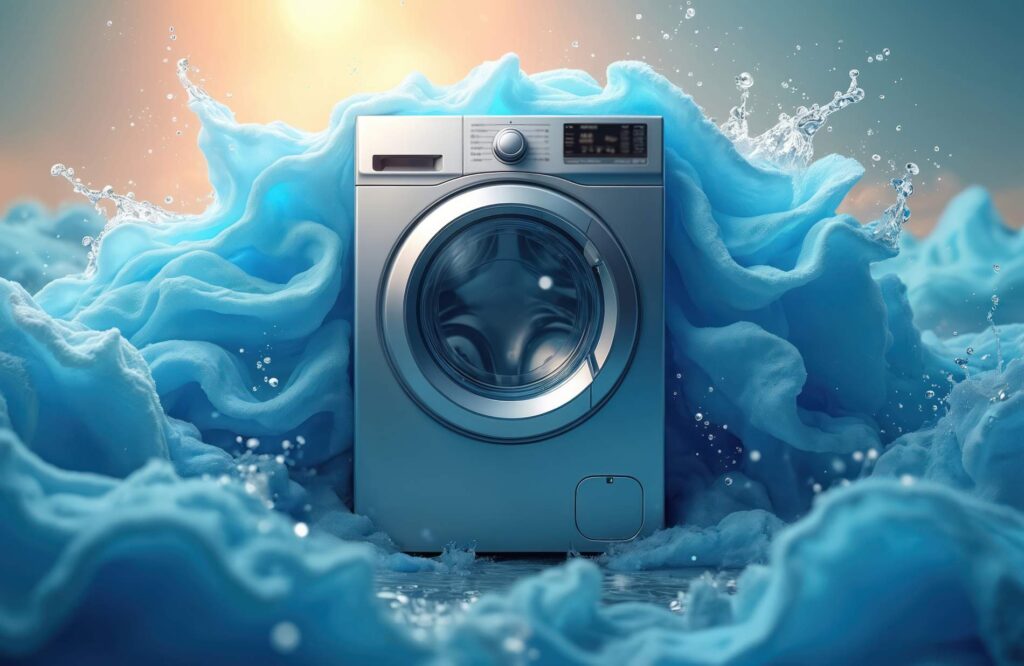
- household washing machines: top-loading and front-loading types (with capacity of ≤ 16 kg); and
- household dishwashers: freestanding and built-in/integrated types (with rated capacity of one to 16 place settings).
Each appliance category would be rated on a two-tier scale, with MEPS set at their respective Basic level.
Implementation Timeline
Subject to the feedback received during the public and industry consultation exercises, NEA intends to implement the proposals by 2028. Further details on the transition arrangements will be provided.
Click on the following link for more information:
- Public Consultation on the Revamp of the Mandatory Energy Labelling Scheme and the Introduction of MEPS and MELS for Additional Household Appliances (available on the REACH (Reaching Everyone for Active Citizenry @ Home) website at www.reach.gov.sg)
If you have any queries on the above, please reach out to our team set out on this page.
For regional sustainability matters, please see Rajah & Tann Asia’s Sustainability Practice for more information.
Disclaimer
Rajah & Tann Asia is a network of member firms with local legal practices in Cambodia, Indonesia, Lao PDR, Malaysia, Myanmar, the Philippines, Singapore, Thailand and Vietnam. Our Asian network also includes our regional office in China as well as regional desks focused on Brunei, Japan and South Asia. Member firms are independently constituted and regulated in accordance with relevant local requirements.
The contents of this publication are owned by Rajah & Tann Asia together with each of its member firms and are subject to all relevant protection (including but not limited to copyright protection) under the laws of each of the countries where the member firm operates and, through international treaties, other countries. No part of this publication may be reproduced, licensed, sold, published, transmitted, modified, adapted, publicly displayed, broadcast (including storage in any medium by electronic means whether or not transiently for any purpose save as permitted herein) without the prior written permission of Rajah & Tann Asia or its respective member firms.
Please note also that whilst the information in this publication is correct to the best of our knowledge and belief at the time of writing, it is only intended to provide a general guide to the subject matter and should not be treated as legal advice or a substitute for specific professional advice for any particular course of action as such information may not suit your specific business and operational requirements. You should seek legal advice for your specific situation. In addition, the information in this publication does not create any relationship, whether legally binding or otherwise. Rajah & Tann Asia and its member firms do not accept, and fully disclaim, responsibility for any loss or damage which may result from accessing or relying on the information in this publication.